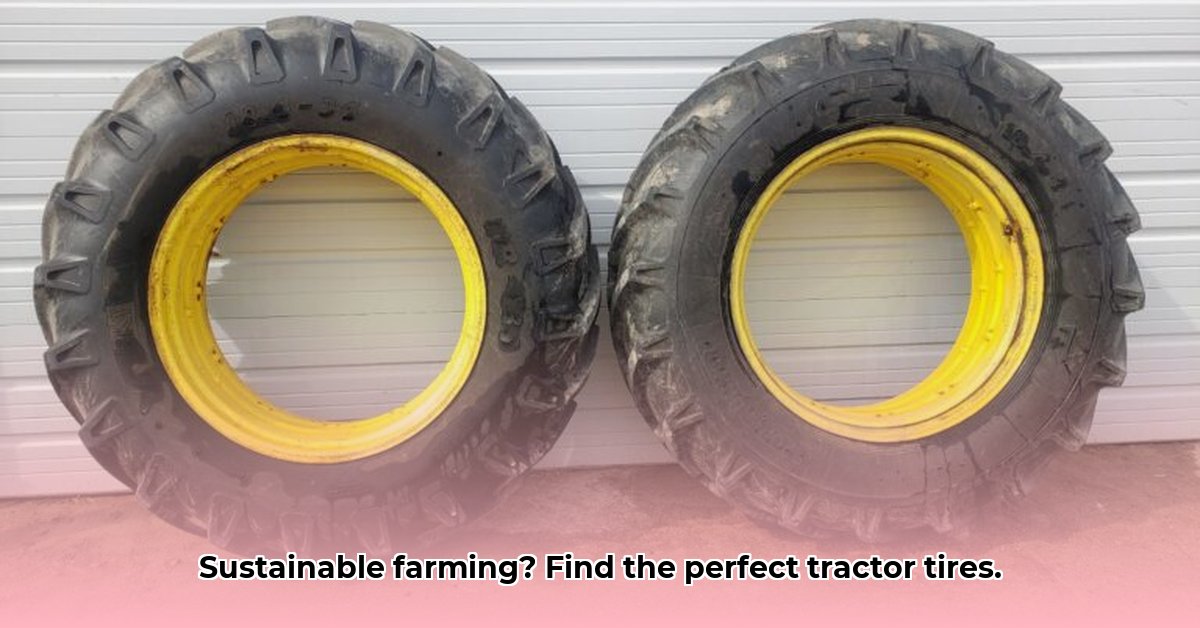
Choosing the right tractor tires is a significant investment impacting your farm's efficiency, fuel consumption, and environmental footprint. This guide focuses on 18.4 x 34 tires, providing actionable steps for selecting, managing, and disposing of them sustainably. For more tire size options, check out this helpful resource: 18.4-30 tires.
Understanding Your Tire Needs
Before selecting a brand, assess your specific requirements. Consider these factors:
- Tractor Type: The size and weight of your tractor determine the appropriate tire load rating.
- Soil Conditions: Heavy clay soils require different tire characteristics than light, sandy soils. Deep lug patterns provide better traction in clay, while less aggressive patterns are suitable for sandy soils.
- Workload: Heavy hauling demands robust tires designed for increased stress and load capacity. Primarily fieldwork may prioritize traction and even wear.
- Budget: While premium tires offer superior durability and longevity, budget-conscious options exist. Balancing initial cost versus long-term value is crucial.
Choosing the Right 18.4 x 34 Tractor Tires: Brands and Features
Several reputable brands offer 18.4 x 34 tractor tires, each with strengths and weaknesses in durability, price, and sustainability features. Data on specific sustainability features is often limited by manufacturers.
| Brand | Durability | Approximate Price Range | Key Features |
|---|---|---|---|
| Armstrong | High | $$$ | Known for longevity and reliable performance |
| Galaxy | Medium | $$ | Often a good balance between cost and durability |
| Goodyear | High | $$$ | Strong reputation, often with robust warranties |
| Powermark | Medium | $$ | Frequently a cost-effective option |
| Petlas | Medium | $ | Budget-friendly, may require more frequent replacement |
Note: Price ranges are estimates and depend on retailer and tire condition. $$$ represents a higher price point than $.
New vs. Used Tires and Retreading
New tires guarantee performance and often come with warranties, but carry a higher initial cost. Used tires offer cost savings but require careful inspection for wear, cuts, and embedded objects. Retreading offers a sustainable alternative, extending a tire's lifespan and reducing waste. However, retreads may have a somewhat reduced lifespan compared to new tires. Is the potential savings of used tires worth the risk of premature failure and the added cost of early replacement?
Finding the Best Deal: A Step-by-Step Approach
- Research: Compare prices and specifications from multiple suppliers, both online and locally.
- Compare: Consider not only the upfront cost but also the tire's expected lifespan and its impact on fuel efficiency. A more expensive, longer-lasting tire may prove more cost-effective in the long run.
- Negotiate: Don't hesitate to negotiate, especially when purchasing multiple tires or used ones.
- Thorough Inspection (Used Tires): Examine used tires for wear, cuts, and any embedded objects. Uneven tread wear may indicate improper use or previous damage affecting tire longevity and safety.
Tire Management and Maintenance: Maximizing Lifespan and Efficiency
Proper tire care is crucial for extending lifespan and fuel efficiency.
- Inflation: Maintain correct tire pressure as specified in your tractor's manual. Underinflation increases wear and fuel consumption, while overinflation can damage the tire.
- Rotation: Rotate tires regularly to ensure even wear across all tires.
- Regular Inspections: Regularly inspect tires for cuts, bulges, and embedded objects, addressing small issues before they escalate.
Sustainable Disposal: Environmentally Responsible Practices
Dispose of worn-out tires responsibly. Many tire retailers offer recycling programs, or you can contact local recycling centers specializing in agricultural tire disposal. Avoid improper disposal methods, such as dumping in fields or landfills.
Conclusion: Sustainable Practices for Long-Term Success
Choosing the right 18.4 x 34 tractor tires is a critical decision affecting your farm's profitability and environmental impact. By following the steps outlined in this guide, you can make informed choices, optimize tire lifespan, and minimize your environmental footprint. Remember that ongoing research in tire technology and sustainable practices is ongoing—staying informed is key to long-term success.